Automatic SEO & AI Discoverability Files Shopi automatically generates and serves every technical file search engines and AI chatbots need — sitemap.xml, robots.txt, llms.txt, agent.json, products.json — for every store, on every domain, with zero setup and no additional fees. They are served for free with love.Most online sellers in Sri Lanka are not developers. They shouldn’t need to be one just to get found on Google.
😩 The Problem Every Non-Technical Seller Has Faced
If you’ve ever set up a store on Shopify, WooCommerce, or Wix without a developer’s help, you’ve likely lived this exact story:
You launch your store, excited to start selling.
Weeks pass. No traffic from Google.
You search your own shop name on Google — nothing shows up.
You eventually discover terms like sitemap.xml, robots.txt, or “submit to Search Console” — usually after losing real sales.
You install a third-party SEO app, configure settings you don’t fully understand, and hope it works.
As a Sri Lankan platform built by people who’ve watched local sellers go through exactly this, Shopi was built to make sure this never happens to a Shopi seller.
Real stores like chicclothingss.com faced this issue before they migrate to Shopi and we found It’s one of the most common reasons small online stores in Sri Lanka stay invisible on Google for months after launch — even when the products and pricing are great.
Other platforms hand sellers an app ecosystem and expect them to install an SEO app, a sitemap app, and now — in the AI era — figure out llms.txt and agent.json themselves too.Shopi automates all of it server-side. Eventhough it support App Ecosystem, No app to install. No setting to configure. No technical knowledge required. Because we know exactly how Sri Lankans are built.The moment a seller creates their store, Shopi automatically generates and serves:
File
Path
Purpose
Sitemap
/sitemap.xml
Tells search engines every page on your store
Robots file
/robots.txt
Tells crawlers what they’re allowed to access
AI instructions
/llms.txt
Plain-language summary of your business for AI models
AI agent file
/agent.json
Structured instructions for AI shopping agents
Product feed
/products.json
Machine-readable catalog of everything you sell
💡 This works identically whether your store is on a free yourstore.shopi.lk subdomain or your own custom domain. Every single shop on Shopi — without exception — gets these files automatically, at the correct root path.
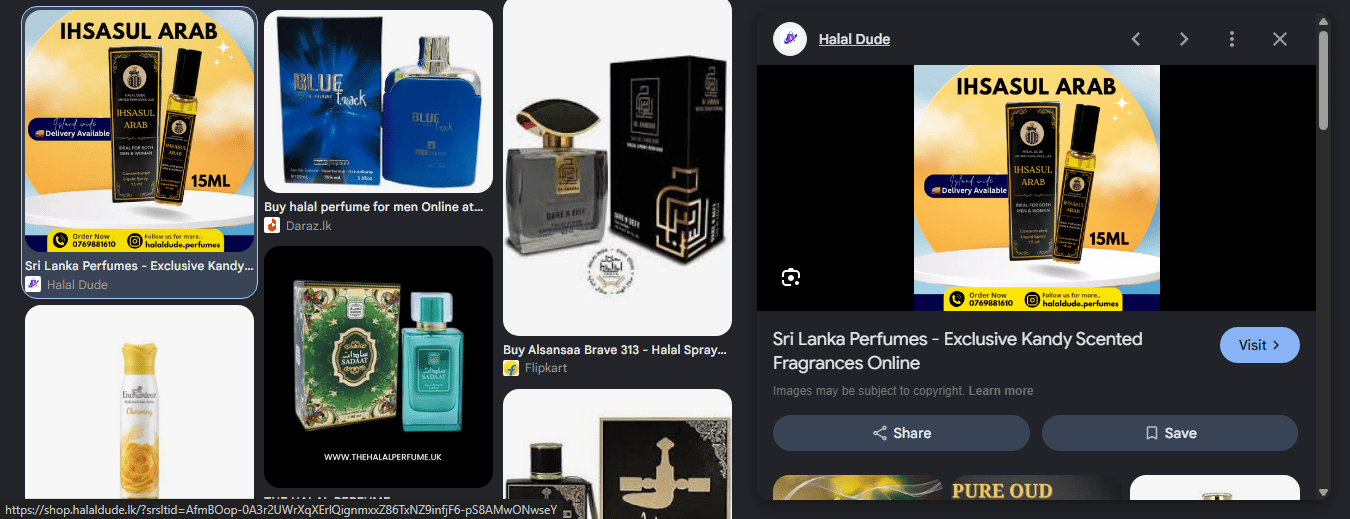
shop.halaldude.lk — a custom domain on Shopi — indexed on Google with the same zero-setup automation
The seller signs up and launches their store using any Shopi theme — including the free starter theme.
2
Shopi generates the files server-side
Behind the scenes, Shopi immediately generates sitemap.xml, robots.txt, llms.txt, agent.json, and products.json for that store, scoped to its real products, pages, and domain.
3
Shopi's universal sitemap updates
The new store is added to Shopi’s universal sitemap, which is already submitted and verified in Google Search Console.
4
Crawlers are notified
Shopi pings search engines and crawlers to request indexing of the new store’s files — no manual submission needed.
5
Store becomes discoverable
Within the normal crawl/indexing window for the search engine or AI platform, the store starts appearing in search results and AI-generated answers.
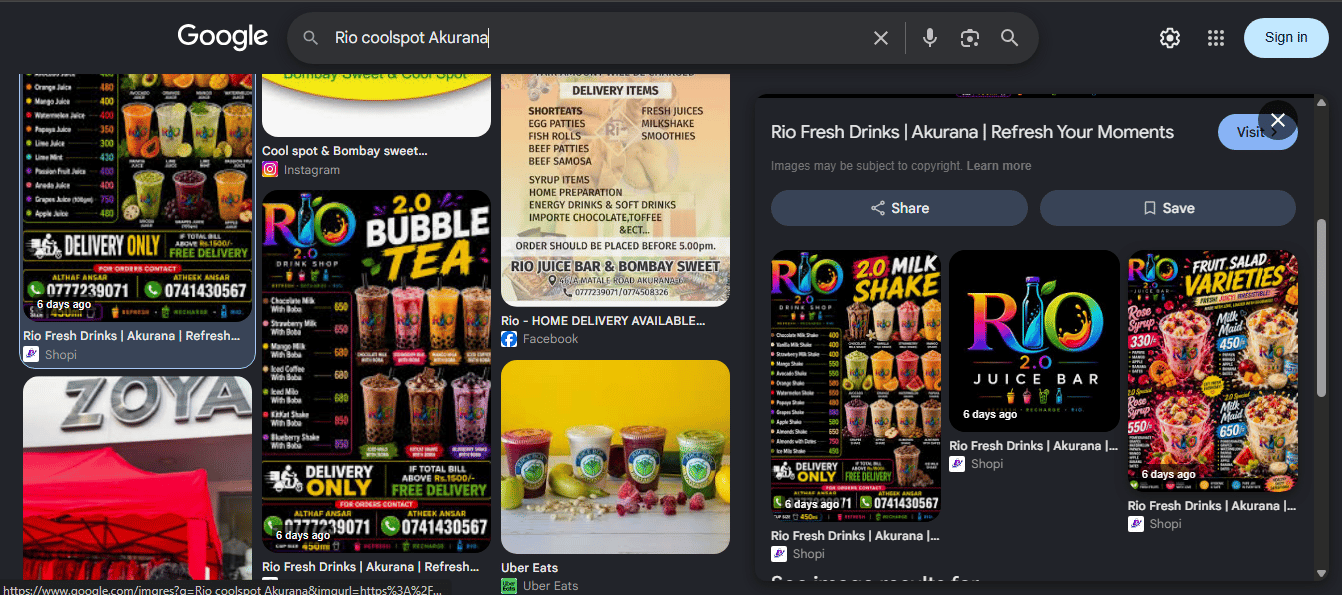
See it live — not just a claim. This isn’t theoretical. Our shop rio.shopi.lk is already indexed on Google — even though the seller never submitted a single file to Search Console.
rio.shopi.lk appearing in Google search results with zero manual SEO setup by the seller
The seller does none of this manually. There’s no “Generate Sitemap” button to find, because there’s nothing left to generate — it’s already done.
1. AI Chatbots Can Crawl Freely — Without Ever Touching Your Sensitive Data
Because Shopi runs on headless commerce architecture, your storefront (on *.shopi.lk or your custom domain) is completely separate from your seller dashboard, login credentials, and account data — which stay secured under shopi.lk infrastructure.This means search engines and AI crawlers can freely crawl your storefront’s public files without any risk of exposing sensitive systems, because those systems were never reachable from the storefront in the first place.
This is the core advantage of headless commerce: your storefront and your dashboard are different systems entirely. A crawler visiting your store literally cannot reach your login page or account data — it isn’t part of the same application.
2. AI Chatbots Learn About Your Business Through llms.txt
llms.txt is a plain-language file that summarizes what your business sells, who it serves, and what makes it worth recommending — written specifically for AI models to read.When a customer asks ChatGPT, Gemini, Claude, or another AI assistant for a product recommendation, that AI may read your llms.txt to understand your store well enough to mention it in its answer.
3. AI Chatbots Read JSON, Not Webpages — So Shopi Speaks Their Language
AI chatbots don’t browse a store the way a human does. They don’t “see” a homepage layout or scroll through a banner carousel — they look for structured, machine-readable data they can parse instantly.That’s exactly what products.json and agent.json provide:
products.json — your full catalog, machine-readable
A structured feed of every product you sell: names, prices, descriptions, stock status, and variants — formatted for instant parsing by AI systems and shopping agents but sensitive informations like promo codes, online payment credentials are always stay securely inside our database.
agent.json — instructions for AI shopping agents
A structured file describing your store’s public information for AI agents: active discounts, marketing campaigns, store policies, and other details an AI agent needs to accurately represent your business.
💡 Fun fact: the same AI that helps a customer plan a trip or write an essay can also pull up your store’s discount and recommend it — but only if it can actually read what you’re offering. That’s exactly what these files are for.
📈 The Result: More Visibility, More AI-Driven Sales
Put together, this automation means every Shopi store — regardless of the seller’s technical background — launches already optimized for both traditional search engines and the new generation of AI-driven discovery.
Zero setup required
No SEO app to install, no sitemap generator to configure. It’s already running the moment your store goes live.
Works on any domain
Free *.shopi.lk subdomains and custom domains are treated identically — same files, same automation, same result.
Built for AI-era discovery
llms.txt and agent.json mean your store is ready for how AI assistants actually find and recommend businesses today.
Built for Sri Lankan sellers
No global platform built this with our sellers in mind. Shopi did.
Shopi estimates this can meaningfully multiply a store’s AI-driven discovery compared to manually configuring (or never configuring) these files on global platforms like Shopify, WooCommerce, or Wix. This is a directional estimate based on typical seller setups, not a guaranteed outcome for every store — actual results depend on your products, competition, and category.